Work / Flux Footwear
Flux Footwear
DTC brand
Co-founder · 2019–2023 · Route to market, data, and supply chain
Gallery
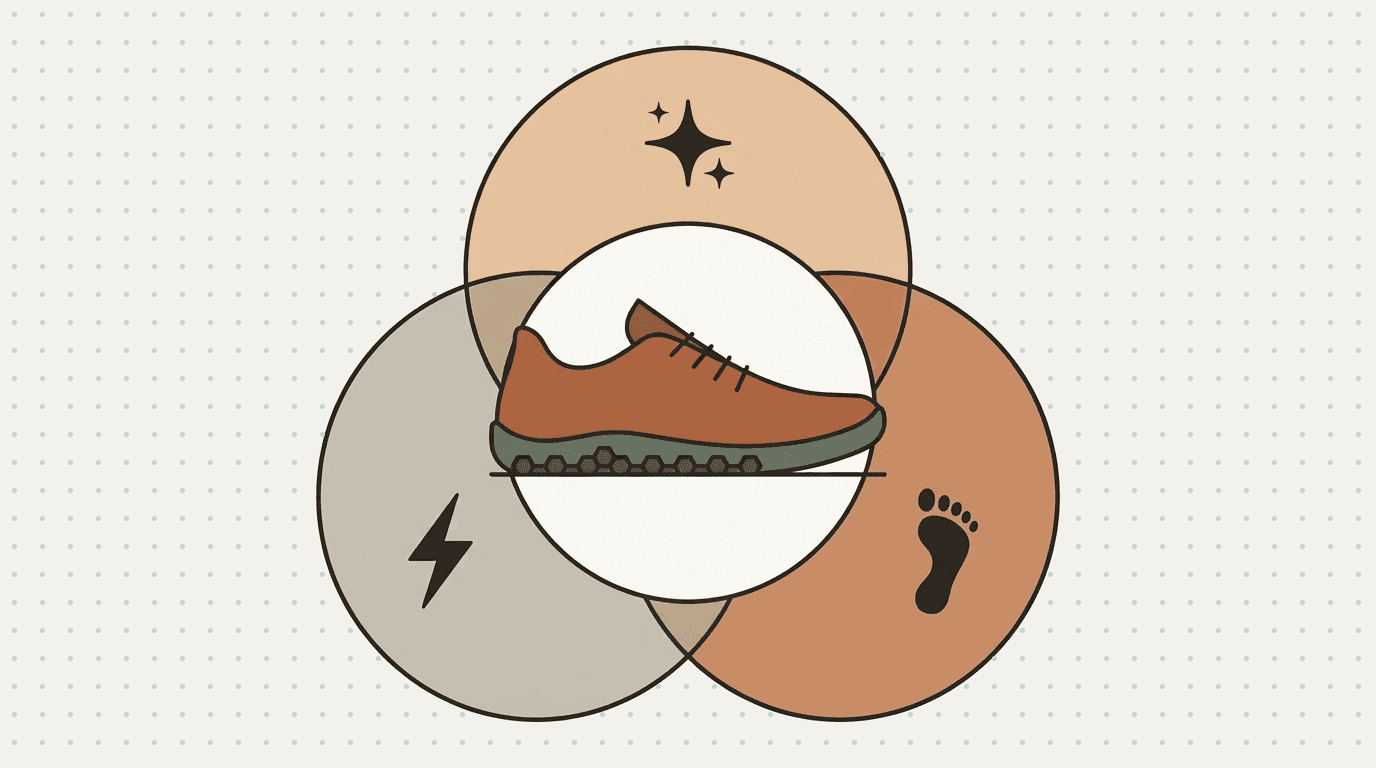
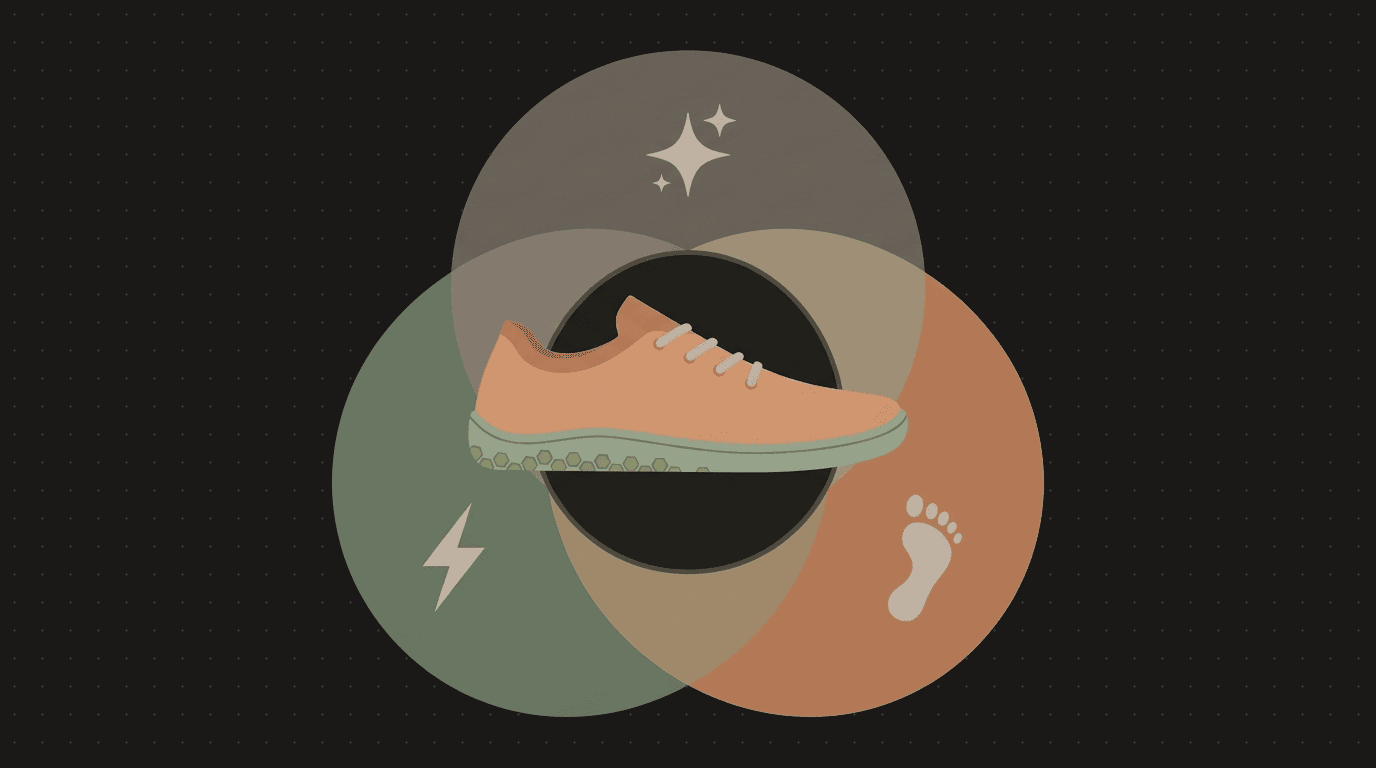
The idea traces back to an ankle injury from basketball, which got me into barefoot shoes and natural-movement training. Flux grew out of a simple Venn diagram. One circle was shoes that look good. Another was real performance capability. The third was barefoot mechanics: zero drop, a wide toe box, and a sole that bends with the foot. Plenty of shoes sat in one or two of those circles. Almost nobody was building for the people in the middle, and there turned out to be a lot of them.
Three of us started Flux in 2019, including a footwear designer with ten years at Reebok and Puma. The first shoe, the Flux Adapt, had a patent-pending sole system: a cushioned insole over a honeycomb rubber outsole that splays with the foot. It launched on Indiegogo on November 3, 2020, hit its $15,000 goal in two hours, and passed $30,000 inside a day.
We opened the Shopify store in July 2021. Monthly revenue grew 500% in its first year, and Flux reached seven-figure annual revenue selling direct to consumers. By early 2023 the line included the Adapt Trainer and graphene-soled models, and the Adapt Runner was in design.
At three people, every founder works across the whole business. I worked on paid media and email with my partners, and three pieces of the company were mine to build.
The first was the route to market. A first production run is expensive, so I proposed crowdfunding to prove demand before we paid for one. The campaign funded in two hours. From there I planned the move to selling direct on our own store.
The second was data. When iOS 14 broke browser-side ad tracking, our Meta pixel started double-counting orders. Every ad decision was running on inflated numbers. I moved tracking server-side with Littledata, so Google Analytics and Meta's Conversions API ran on Shopify's own order records. That was the year monthly revenue grew 500%.
The third was inventory and supply chain. I ran demand planning and reorders with our manufacturer in South Korea. A production run commits you to sizes and colorways long before you know what will sell, and at a company our size a wrong bet ties up cash you need for the next run.
I sold my stake in early 2023. The Shopify, ad spend, and inventory data I worked with at Flux is what lmn.bar now puts in one view.
The idea
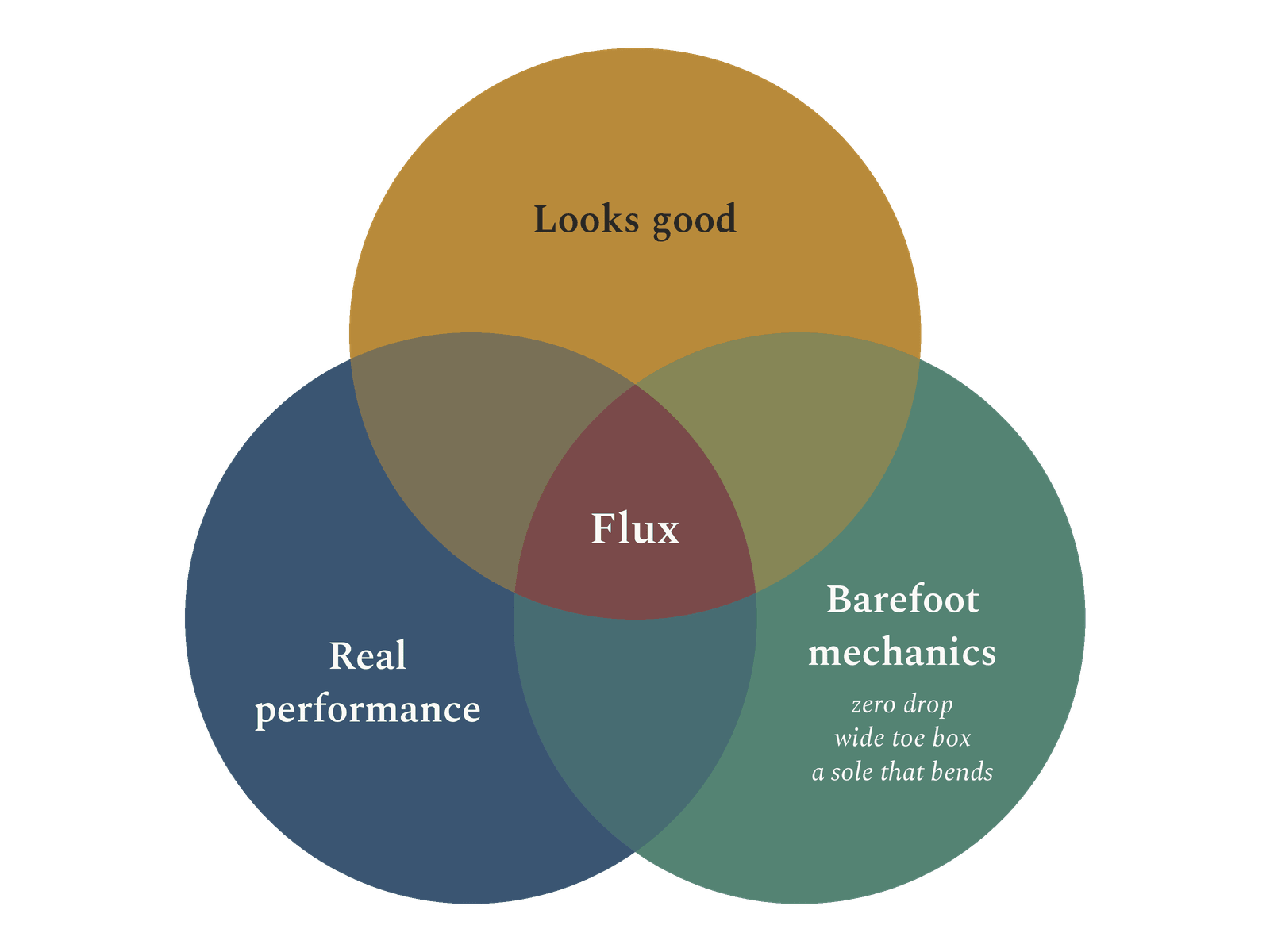
The idea traces back to an ankle injury from basketball, which got me into barefoot shoes and natural-movement training. Flux grew out of a simple Venn diagram. One circle was shoes that look good. Another was real performance capability. The third was barefoot mechanics: zero drop, a wide toe box, and a sole that bends with the foot. Plenty of shoes sat in one or two of those circles. Almost nobody was building for the people in the middle, and there turned out to be a lot of them.
Launch
Three of us started Flux in 2019, including a footwear designer with ten years at Reebok and Puma. The first shoe, the Flux Adapt, had a patent-pending sole system: a cushioned insole over a honeycomb rubber outsole that splays with the foot. It launched on Indiegogo on November 3, 2020, hit its $15,000 goal in two hours, and passed $30,000 inside a day.
Growth
We opened the Shopify store in July 2021. Monthly revenue grew 500% in its first year, and Flux reached seven-figure annual revenue selling direct to consumers. By early 2023 the line included the Adapt Trainer and graphene-soled models, and the Adapt Runner was in design.
What I built
At three people, every founder works across the whole business. I worked on paid media and email with my partners, and three pieces of the company were mine to build.
The first was the route to market. A first production run is expensive, so I proposed crowdfunding to prove demand before we paid for one. The campaign funded in two hours. From there I planned the move to selling direct on our own store.
The second was data. When iOS 14 broke browser-side ad tracking, our Meta pixel started double-counting orders. Every ad decision was running on inflated numbers. I moved tracking server-side with Littledata, so Google Analytics and Meta's Conversions API ran on Shopify's own order records. That was the year monthly revenue grew 500%.
The third was inventory and supply chain. I ran demand planning and reorders with our manufacturer in South Korea. A production run commits you to sizes and colorways long before you know what will sell, and at a company our size a wrong bet ties up cash you need for the next run.
I sold my stake in early 2023. The Shopify, ad spend, and inventory data I worked with at Flux is what lmn.bar now puts in one view.